.webp)






A Comprehensive News-Style Analysis of Call of Duty: History, Evolution, and Industry Impact
1. Introduction
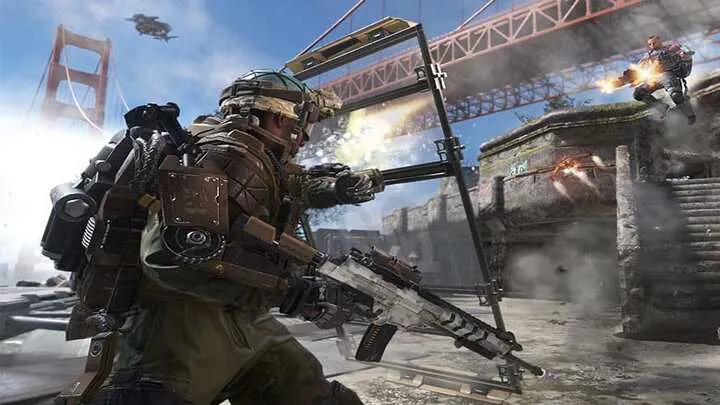
Few video game franchises have shaped modern interactive entertainment as profoundly as Call of Duty. From its origins as a World War II shooter to its transformation into one of the world’s largest multimedia properties, the franchise has moved beyond gaming and become a cultural symbol of military fantasy, competitive esports, and blockbuster entertainment. This long-form analysis explores the franchise’s evolution, the technological and creative innovations behind it, its business impact, and its influence on the gaming ecosystem over the past two decades.
2. Origins of the Franchise
The first title released in 2003 emerged during a period when the first-person shooter genre was dominated by titles such as Medal of Honor. Instead of focusing on a single heroic protagonist, the developers introduced a more grounded, squad-based approach inspired by real historical accounts. This creative decision distinguished the franchise immediately and helped it secure a passionate audience.
Early titles emphasized authenticity through historically accurate weapons, vehicles, and environments. The development team consulted historians and military experts to elevate immersion, laying the groundwork for a franchise identity rooted in realism, spectacle, and emotional storytelling.
3. Rise to Global Dominance
3.1 Shift to Modern Warfare
The release of Modern Warfare in 2007 marked a major turning point. The game abandoned the well-explored World War II setting in favor of a modern geopolitical narrative with global military tensions. This pivot revitalized the entire genre, introducing cinematic mission design, enemy AI improvements, nonlinear storytelling, and high-stakes, controversial plotlines.
3.2 Breakthrough in Multiplayer
Multiplayer progression systems also revolutionized the industry. The introduction of persistent ranks, unlockable weapons, customizable loadouts, killstreaks, and challenge-based progression became new standards for FPS multiplayer design. Today, nearly all competitive shooters borrow elements from this blueprint.
3.3 Annualized Release Strategy
The publisher at the time, Activision, adopted an annual release schedule supported by a multi-studio development pipeline including companies such as Treyarch and Infinity Ward. This allowed the franchise to maintain momentum, ensuring a fresh title every year while preserving varied artistic voices and gameplay sub-genres within the series.
4. Gameplay, Technology, and Design Innovations
4.1 Cinematic Storytelling
The franchise established a new standard for cinematic single-player campaigns. High-budget set pieces, motion capture performances, emotional character arcs, and orchestrated pacing created an experience similar to high-production war films. The series consistently explores themes such as betrayal, nationalism, technological warfare ethics, and the cost of conflict.
4.2 Mechanical Refinement
Each release pushes refinements in core mechanics—movement systems, aiming responsiveness, gunplay feedback, destructible environments, and enemy behavior. The franchise is known for its “tight” controls: minimal input latency, predictable recoil patterns, and fluid movement that rewards reflexes and strategy.
4.3 Evolution of Visual Technology
Render engines have evolved across decades:
The early IW Engine brought high-fidelity animation and physics.
Later versions introduced global illumination, dynamic weather systems, photogrammetry, volumetric lighting, and advanced motion blur.
Modern titles emphasize realism with 4K textures, advanced materials, and real-time ray tracing.
5. Multiplayer and Online Ecosystem

5.1 Core Competitive Modes
The multiplayer experience remains the franchise’s heartbeat. Modes such as Team Deathmatch, Domination, Search & Destroy, and Hardpoint became cultural staples. Maps are designed around three-lane layouts ensuring balanced flow, visibility, and engagement.
5.2 Progression and Customization
Over time, customization expanded to include weapon blueprints, camo challenges, operators, perks, field upgrades, and seasonal battle passes. These systems encourage long-term engagement and have generated billions in microtransaction revenue.
5.3 Skill-Based Matchmaking (SBMM)
Modern titles use advanced matchmaking algorithms to balance lobbies based on player performance. Though controversial among some fans, SBMM has contributed to more equitable gameplay experiences, especially for new players.
5.4 Anti-Cheat and Online Integrity
Sophisticated anti-cheat frameworks such as Ricochet were introduced to combat hacking, boosting competitive integrity across platforms.
6. The Rise of Warzone and the Free-to-Play Shift
In 2020, the franchise entered the battle royale market with Warzone, a standalone free-to-play title integrated with mainline releases. It transformed the franchise in several ways:
Accessibility
A free entry point expanded the audience globally, attracting millions of new players and establishing the brand in regions previously unfamiliar with premium shooters.
Cross-Play
Players across consoles and PC could compete together for the first time, signaling a shift toward a unified ecosystem.
Live-Service Model
The game adopted seasonal updates, rotating playlists, limited-time events, weapon balancing patches, narrative events, collaborations, and persistent account progression.
Massive Map Design
Maps such as Verdansk and Caldera became cultural icons, featuring open-world design with exploration, contracts, vehicles, buy stations, and emergent gameplay.
7. Cultural and Industry Impact